AGRICULTURE THEN AND NOW

By: CropLife International

Thanks to plant science and other innovations, agriculture has progressed tremendously over the past 150 years, becoming more and more efficient over time. If the world’s farmers would have continued to grow crops at 1961 productivity levels, they would need almost a billion hectares of new farmland to maintain today’s food supply – which is more than the total land area of the United States!

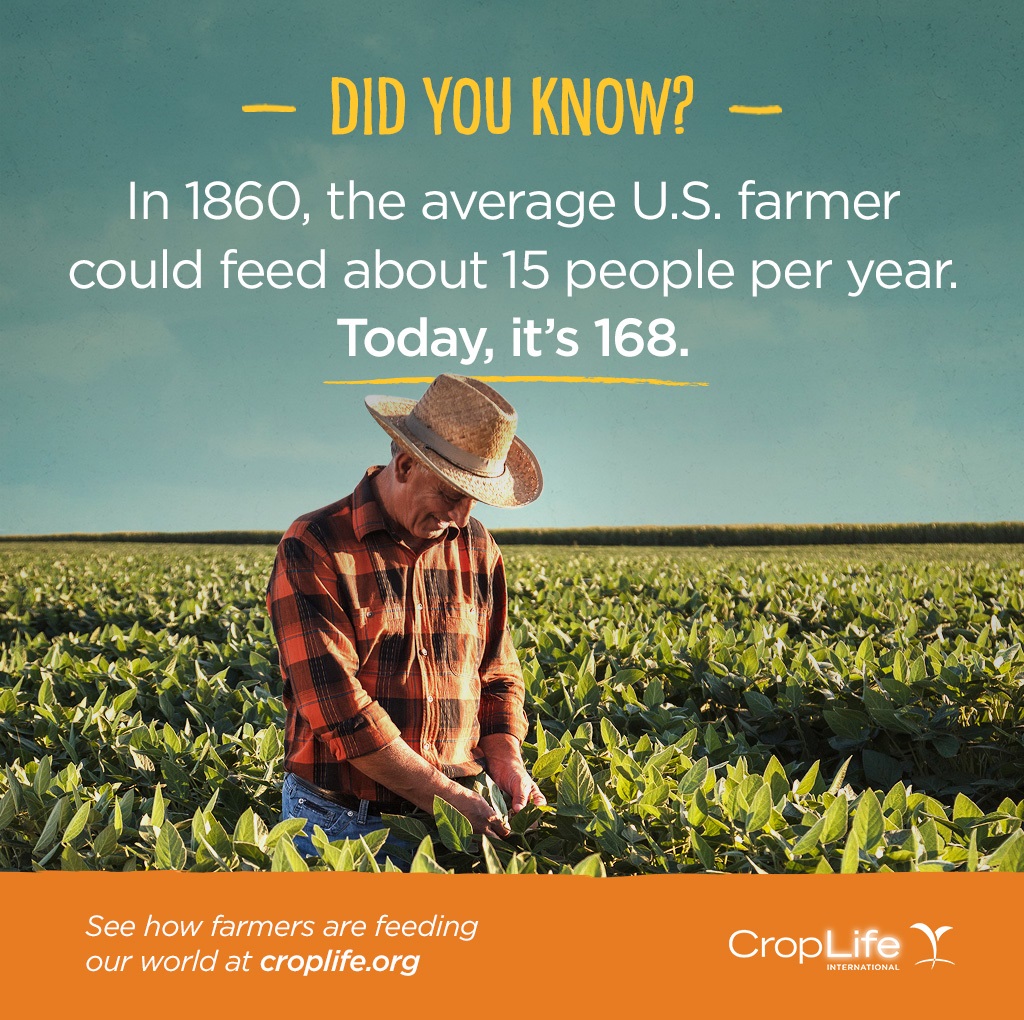
Below are a few snapshots of U.S. and global agriculture over several decades, which highlight how far we’ve come in terms of increased crop production. Doing the math, in 1860, each U.S. farm fed an average of 15 people. In 2010, each farm could feed over 140 people! During that same time, the population increased 882 percent, but the total acreage dedicated to farmland did not increase as drastically. Farmers became more efficient, using improved seeds, crop protection products, machinery and more that resulted in more yields on cultivated land. All of this occurred while reducing the workforce involved in agriculture from nearly half of the population in 1860 to less than 1 percent now.

To keep up with the growing population, the Food and Agriculture Organization (FAO) predicts that agricultural production will need to increase by 70 percent (nearly 100 percent in developing countries) by 2050. The FAO says that 80-90 percent of this increase will come from higher yields and increased cropping intensity – the number of crop growing seasons that can occur in one year – with only the small remainder coming from converting land not currently used for farming.

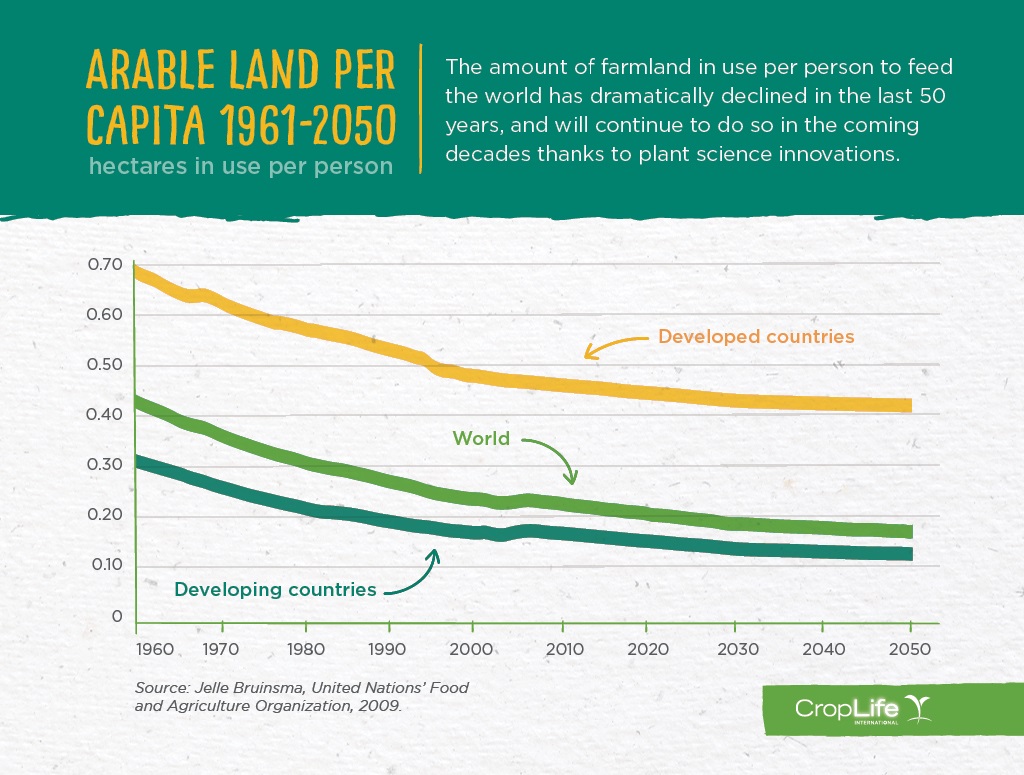
The chart below shows that the total “arable land,” or land used for farming, peaked in the late 1960s and has declined or maintained until now, thanks to agricultural innovations. As countries continue to produce higher yields and use the land more efficiently, this trend is expected to continue in the future.
 

This article and the image included was published and created by CropLife International. See original post here

4,500 YEARS OF CROP PROTECTION

By: CropLife International

Like all agricultural innovations, crop protection products have evolved tremendously since their inception. From natural chemical elements to plant- and metal-based insecticides to synthetic products, formulations have drastically changed and for the better: today’s products are more sustainable, targeted, efficient and environmentally friendly than their predecessors. In honor of Earth Day on April 22, here’s a brief history of the evolution of crop protection products.

The first recorded use of an insecticide was about 4,500 years ago by the Sumarians, who used sulfur compounds to control insects and mites attacking their food sources. Then, in the first century B.C., Romans used a few techniques – a compound made from crushed olives, burnt sulfur and salt – to control ants and weeds in their crops. In 800 A.D., the Chinese used arsenic mixed with water to control insects in their field crops and citrus orchards. Other pesticides, derived from natural sources such as pyrethrum from dried Chrysanthemum flowers and nicotine extract from tobacco plants, evolved over time.

From 1750 to about 1880, farmers began using crop protection products more widely and international trade promoted the use of plant- and metal-based insecticides. Until the early 1900s, Europe and the U.S. used compounds made with sulfur, iron, copper, arsenic and sodium to control weeds in cereal crops and fungus in grapes. In the 1930s and 40s, effective and widely used fungicides were developed along with the first synthetic insecticides.

By the 1960s and 70s, farmers began to utilize Integrated Pest Management(IPM) to control pests. IPM is based on the idea that farmers can manage insect pests, using crop protection products only when needed. This practice paved the way for the development of more targeted and environmentally friendly products, such as pyrethrum-based formulations. In addition, with improved research, the plant science industry began developing more efficient products that were effective at lower rates, such as 1 ounce of active ingredient per acre rather than 2 pounds used previously. Herbicides like glyphosate, which are still commonly used today, were developed in the 1970s and have continued to improve and become more efficient over time.

In the 1990s, crop protection product development concentrated on finding active ingredients that better target pests. Through biotechnology, plant scientists also improved the IPM concept – using naturally occurring materials such as insect hormone or venom, microbes or plant material extracts like Bacillus thuringiensis (Bt) – to more accurately and selectively target pests. Finally, weed treatments, such as neonicotinoids, were developed during this time to protect emerging seedlings from pests while not impacting beneficial species like pollinators.

The plant science industry invests heavily in research to develop new products, ensuring that they do not pose unacceptable risks to humans or the environment. In fact, it now takes about $286 million USD and 11 years of research and development to bring a new crop protection product to market.

Today, crop protection products are more environmentally friendly, targeted and efficient, allowing farmers to better control target pests while allowing beneficial flora and fauna to prosper.

This article and the image included was published and created by CropLife International. See original post here

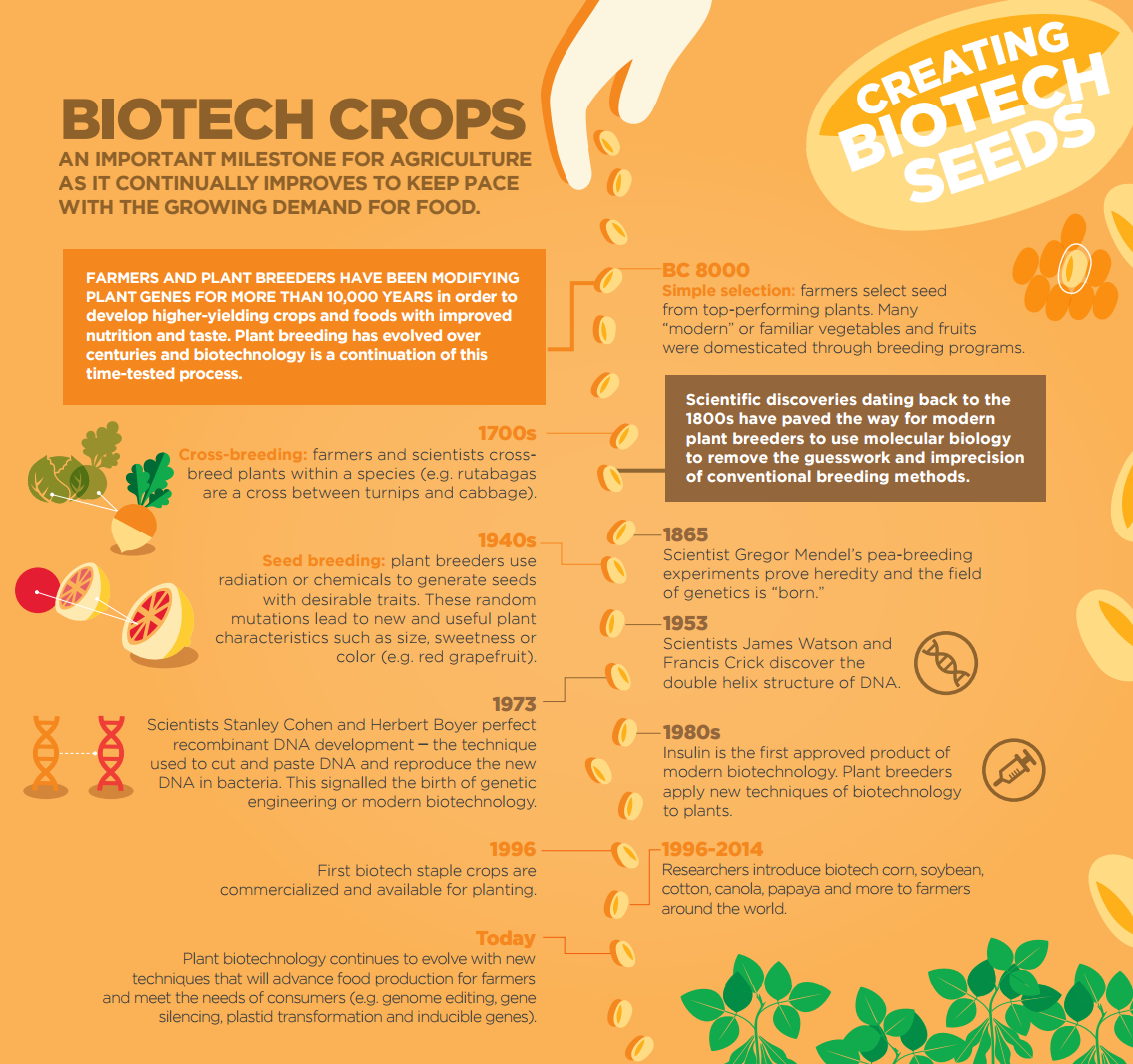
10,000 YEARS OF BIOTECHNOLOGY

The modification of crops to improve food has very early roots, starting with farmers selecting seed from top-performing plants and ending with today’s sophisticated biotech techniques such as “gene dimming.” Over time, plant breeding has gotten much more precise and efficient.

This article and photo was originally posted by CropLife International. Click to access the link here